
For seven nights,
they don’t visit
a school. They
belong to one.
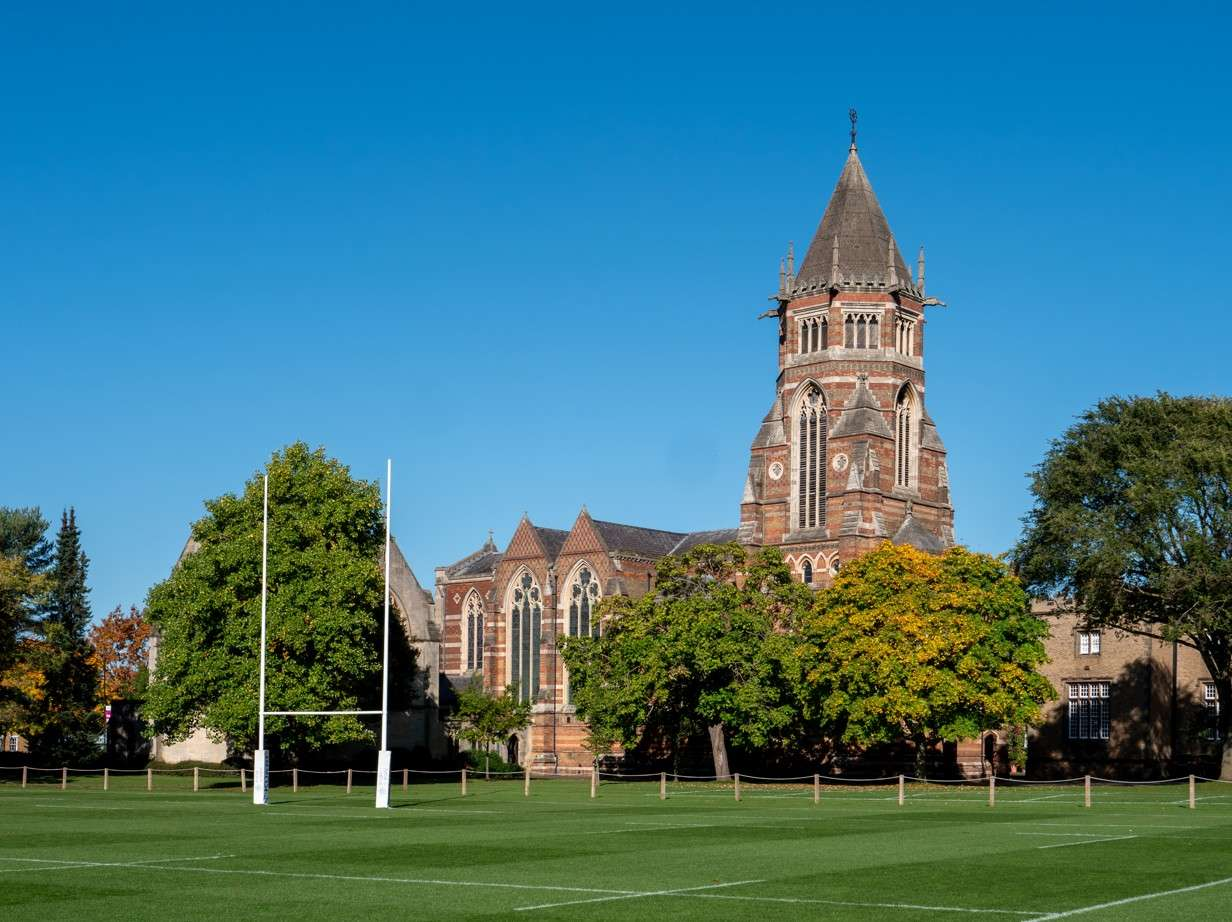
Not a tour of a campus. A place in residence at a historic English school — a bed in a house, a name on a timetable, a seat in a real lesson, a shirt in a real match, and on the last night, a disco the whole house is invited to.
10 schools from India. 10 students each. that’s the whole cohort.
Term begins on arrival.
The term diary
Written the way the week actually unfolds — by the third night nobody is homesick, by the fifth they have a team, and on the seventh there is a disco and a great deal of hugging.
The coach turns in past the playing fields and stops in front of a building older than most Indian cities’ municipal records. Inside, there is a list on the wall with their names already on it, sorted into houses. Keys, a common room, a bed that is theirs for a week, and a local buddy who has been waiting to meet them. Dinner is in hall, at long tables, and nobody eats quietly.
The wake bell at 07:15 is a shock exactly once. Breakfast, then whole-school assembly — hymn, notices, the headmaster’s two minutes — and then real lessons: literature discussed rather than dictated, sciences in a lab with local protocols, maths taught in a way that makes half of them sit up. Games in the afternoon. Prep with their buddy in the evening, same worksheet, different country.
By day three the corridors make sense and the shortcut to the dining hall is common knowledge. Lessons run as normal, but the afternoon is the turning point: they join a real society — debating, choir, robotics, drama — and are expected to contribute, not observe. Somebody comes back to the house having been given an actual role in a school play.
The afternoon everything changes. Rugby, football or swimming with the school teams — and Indian students who have never held an oval ball discover that being gloriously, publicly bad at something in front of new friends is the fastest way to make them. Bruises are compared at dinner with enormous pride. This is the photograph parents put on the fridge.
A day the science teachers back home will want a full report on: laboratory sessions run to the host school’s protocols, followed by a talk in a lecture theatre with wooden benches worn smooth by two centuries of students. Evening is the cultural showcase rehearsal — our students preparing to present India to the school that took them in.
Weekend rules. Into London with housemates and escorts: a museum chosen and argued over by the students themselves, lunch at a market on a fixed allowance, the South Bank in the afternoon, and a West End show in the evening. They see London the way a London schoolchild sees it — from inside the group, not through a coach window.
The morning is theirs to finish anything unfinished. The evening belongs to two things. First the cultural showcase — our students performing India for the whole house, in a hall that has heard a great many accents. Then the house disco: lights down, speakers up, one hundred teenagers from two countries dancing very badly to the same songs, teachers included, until the housemaster calls time. There is hugging. There are phone numbers. There is at least one student in tears who spent day one insisting they were too old for all this.
Bags in the hall, keys returned, one last walk across the grass to the gates. They arrived as a group of Indian students on a school trip; they leave as members of a house that will remember them. The coach is quiet for the first ten minutes and then extremely loud for the rest of the journey.
Live one day of it — hour by hour
Ten schools. That’s all.
This is an exclusive cohort, not an open tour. Ten schools from across India, a maximum of ten students and one accompanying teacher from each — one hundred students, ten teachers, one house week. Places are allocated strictly in the order schools confirm.
once the ten are in, the cohort closes.
One curriculum. Many countries.
The same residential format extends to 14 or 21 nights across our partner schools and colleges — two or three countries, one carrying curriculum: comparative essays, buddy interviews, cultural showcases.
Reserve one of the ten places
for your school.
Seven nights, ten students, one teacher travelling free. Dates announced shortly — confirmed schools are seated in order of confirmation.
Bring The Residential Exchange
to your school.
Five fields and we’ll come back within two working days with dates, costing and the full safety protocol for this chapter. One teacher travels free with every ten students.